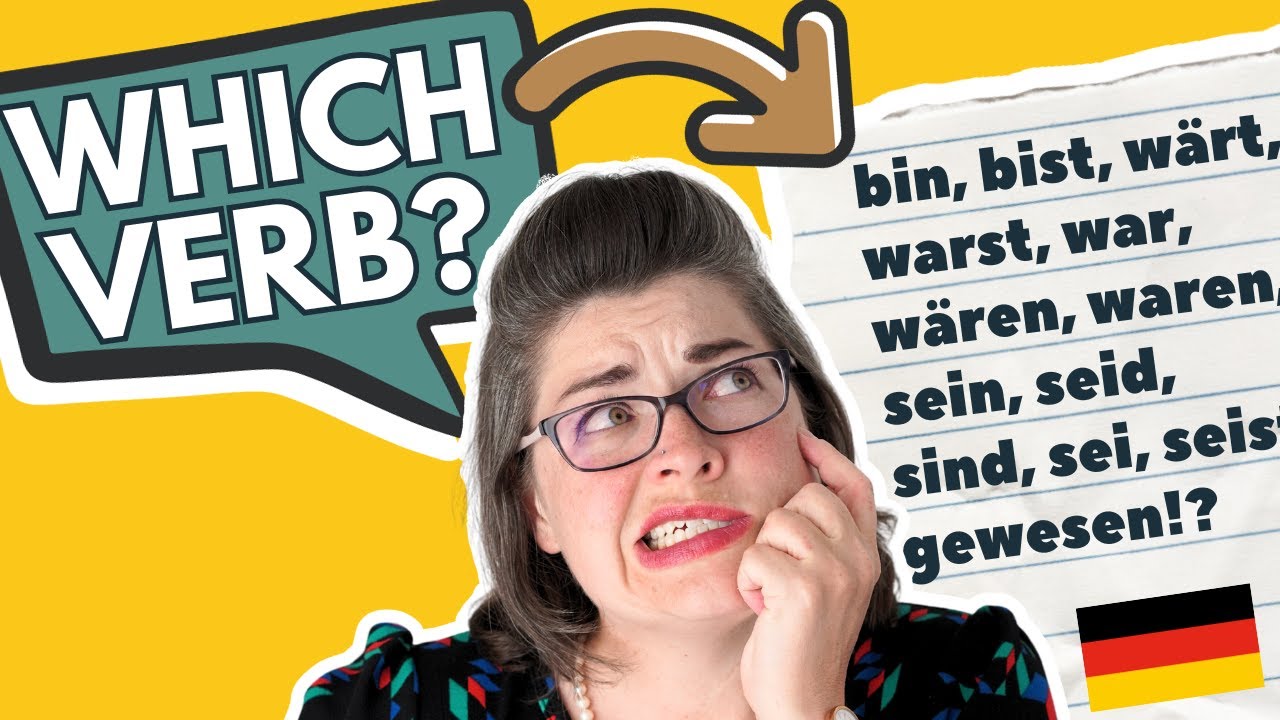
‘Geben’ Conjugations

‘Geben’ conjugations translate to ‘I give / gave / will give, etc.’ The infinitive verb ‘geben’ (‘to give’ in English) is one of the very first German verbs you should learn.

‘Geben’ is a common German verb that you’ll need to use in various tenses and moods in order to communicate in everyday spoken & written German.

‘Essen’ Conjugations

‘Essen’ conjugations translate to ‘I eat /ate/ will eat, etc.’ The infinitive verb ‘essen’ (‘to eat’ in English) is one of the very first German verbs you should learn.

‘Essen’ is a common German verb that you’ll need to use in various tenses and moods in order to communicate in everyday spoken & written German.

‘Sein’ Conjugations

‘Sein’ conjugations translate to ‘I am / was / will be, etc.’ The infinitive verb ‘sein’ (‘to be’ in English) is one of the very first German verbs you should learn.

‘Sein’ is a very commonly used German verb because it’s also involved in formulating various tenses & moods for other verbs.

‘Haben’ Conjugations

‘Gehen’ conjugations translate to ‘I go / I went / I will go etc.’ The infinitive verb ‘gehen’ (‘to go) in English) is one of the very first German verbs you should learn.
‘Gehen’ is a common German verb that you’ll need to use in various tenses and moods in order to communicate in everyday spoken & written German.

‘Gehen’ Conjugations

‘Gehen’ conjugations translate to ‘I go / I went / I will go etc.’ The infinitive verb ‘gehen’ (‘to go) in English) is one of the very first German verbs you should learn.
‘Gehen’ is a common German verb that you’ll need to use in various tenses and moods in order to communicate in everyday spoken & written German.

‘Kommen’ Conjugations

‘Kommen’ conjugations translate to ‘I come/ came / will come, etc.’ The infinitive verb ‘kommen’ (‘to come’ in English) is one of the very first German verbs you should learn.

‘Kommen’ is a common German verb that you’ll need to use in various tenses and moods in order to communicate in everyday spoken & written German.

‘Werden’ Conjugations

‘Werden’ conjugations translate to ‘I become / became / will become, etc.’ The infinitive verb ‘werden’ (‘to become’ in English) is one of the very first German verbs you should learn.

‘Werden’ is a common German verb that you’ll need to use in various tenses and moods in order to communicate in everyday spoken & written German.

‘Können’ Conjugations

‘Können’ conjugations translate to ‘I can / am able to, etc.’ The infinitive verb ‘können’ (‘to be able to’ in English) is one of the very first German verbs you should learn.

‘Können’ is a common German verb that you’ll need to use in various tenses and moods in order to communicate in everyday spoken & written German. It is a special type of verb, called a “modal” verb that expresses a possibility, permission, obligation or ability.

‘Lesen’ Conjugations

‘Lesen’ conjugations translate to ‘I read/ read / will read, etc.’ The infinitive verb ‘lesen’ (‘to read’ in English) is one of the very first German verbs you should learn.

‘Lesen’ is a common German verb that you’ll need to use in various tenses and moods in order to communicate in everyday spoken & written German.

German Word Order

Just when German is starting to make sense, you’re thrown another curveball: the elements of German sentences can move around … a lot.

We’re not used to this! To our English brains, having words swap places in a sentence drastically changes what is being said (including the option of the final result being utter nonsense).

So, when we try to translate a German sentence word-for-word into English, we can end up with some wonky, confusing sentences. It’s easy to feel lost, fast.